
Teable vs Airtable: Which Fits Your Team?
A practical Teable vs Airtable choice guide based on hosting control, PostgreSQL, AI workflows, custom apps, ecosystem, migration, and operations.
Short answer: Teable is the stronger fit when your team needs a PostgreSQL-backed platform that can be self-hosted and used as an AI workflow foundation. Airtable is the stronger fit when a polished hosted platform, broad integrations, governance features, and existing team habits matter more than controlling the runtime. The winner is determined by your operating constraints, not by which grid looks nicer.
What Teable is
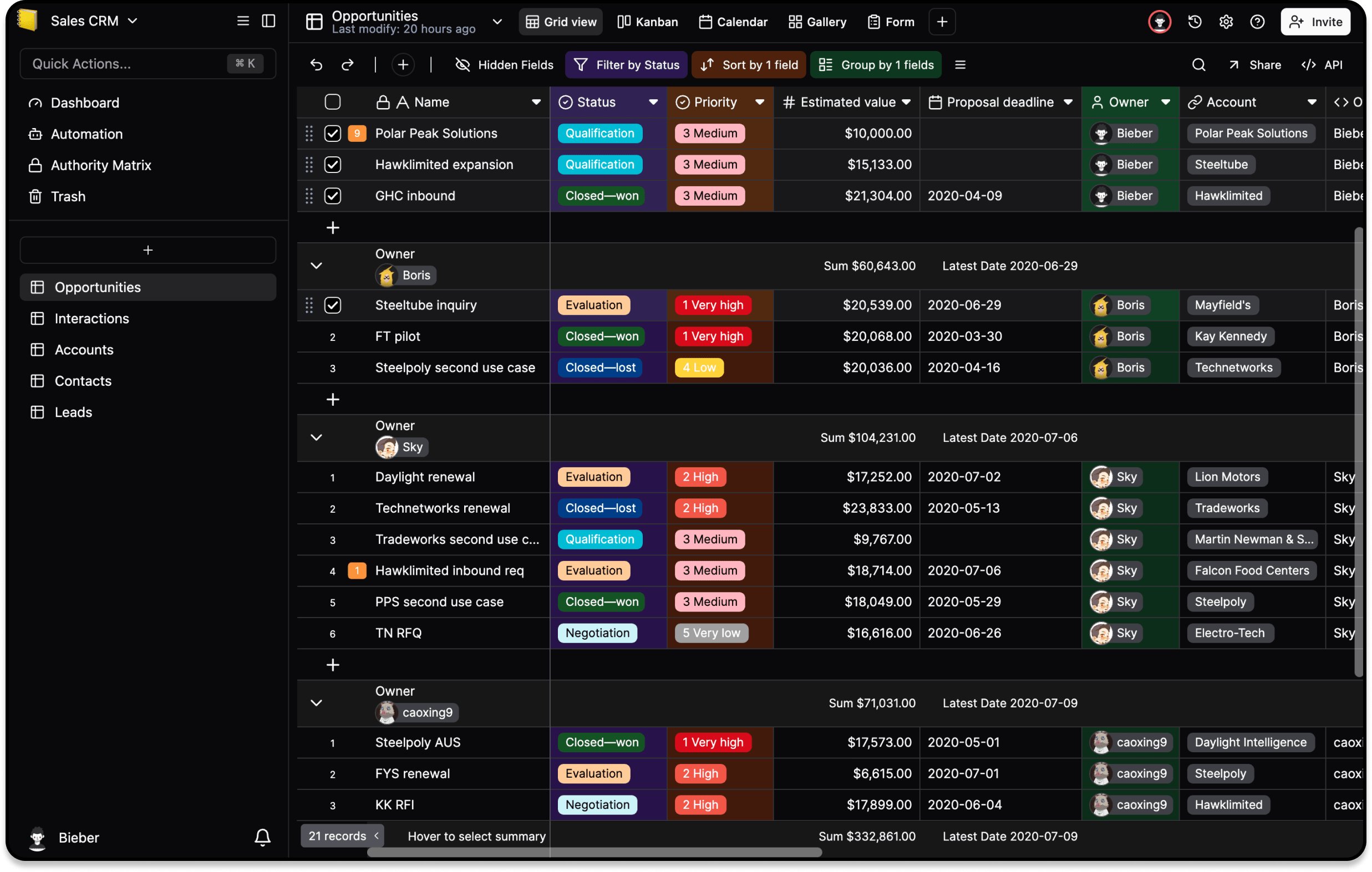
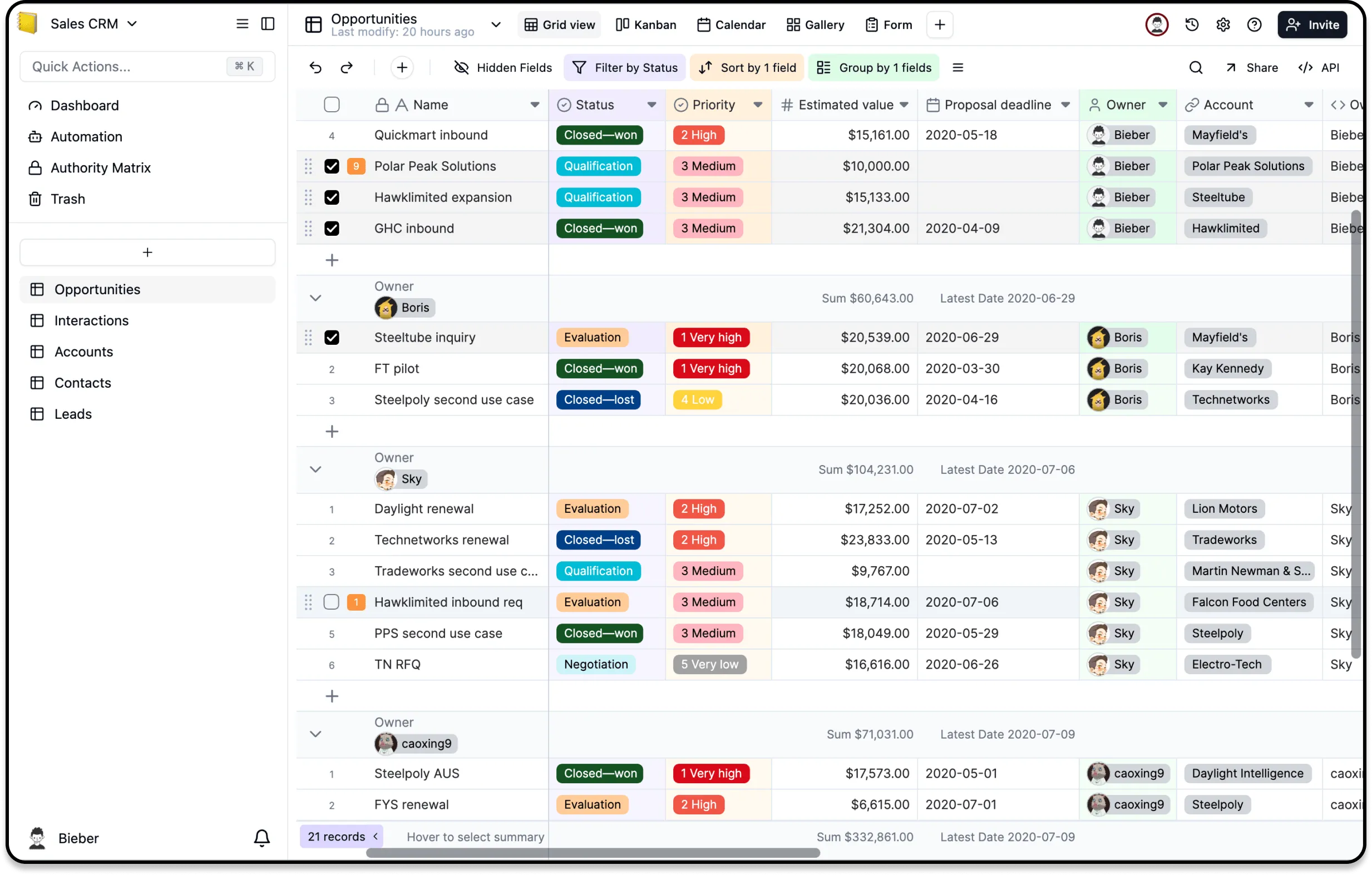
Teable describes itself as an AI Spreadsheet for Business. Its official repository says the spreadsheet-like surface sits on real PostgreSQL and combines data management, AI workflows, app building, permissions, and APIs. The same repository documents Teable Cloud, a full self-hosted edition, and a standalone self-host option. That gives an engineering team more control over network placement, database operations, and deployment timing, but it also makes that team the operator.
What Airtable is
Airtable presents itself as a hosted relational database and app-building platform. Its current product pages emphasize a shared source of truth, Interfaces, views, automations, AI features, governance, and integrations such as Slack, Salesforce, Jira, and Zendesk. Airtable also markets HyperDB for very large datasets. These are vendor capabilities and positioning; your plan, region, and existing configuration determine what is actually available.
Strengths and weaknesses
| Decision area | Teable strengths | Teable trade-offs | Airtable strengths | Airtable trade-offs |
|---|---|---|---|---|
| Hosting | Cloud or fully self-hosted; deploy inside your network | Your team owns PostgreSQL, storage, upgrades, backups, and incidents | Hosted operation reduces infrastructure work | Less control over runtime and provider change windows |
| Data foundation | Real PostgreSQL underneath the interface; familiar SQL ecosystem | Requires database and deployment skills when self-hosted | Relational model with a polished no-code layer | Migration may require remapping existing bases and automations |
| AI and apps | AI chat, AI fields, App Builder, and agents are positioned in the same workspace | AI credits and enterprise features vary by plan | AI, Interfaces, agents, and automations are integrated with a large SaaS ecosystem | Usage, permissions, and features are plan-dependent |
| Ecosystem | Open APIs and self-hosting make custom integration flexible | You may need to build or maintain connectors | Broad integrations, templates, and established admin tooling | Ecosystem fit can increase platform dependency and cost |
Why a team might choose each one
Choose Teable when private networking, data residency, PostgreSQL access, or deployment control is a hard requirement, and you have an owner for operations. It is also attractive when you want AI to work directly against the same records, permissions, and custom apps rather than creating a separate data silo.
Choose Airtable when the team values a mature hosted experience, needs many ready-made integrations, or already has critical bases, interfaces, and automations there. Keeping the existing workflow can be safer than migrating merely for feature parity. Airtable is not automatically “less technical”; governance, permissions, and large-scale operation still need deliberate design.
How to use either product rationally
Start with one workflow that contains real linked records, attachments, roles, and an automation. In Teable, test both Cloud and the self-hosted path if control is part of the decision; include backup restore, upgrade rollback, API access, and secret rotation. In Airtable, test the same workflow through the relevant interfaces, automations, permissions, integrations, and export path. Measure time to a usable workflow, permission surprises, operator hours, and the cost of keeping the data portable.
Recommendation
Pick Teable for a team that can operate infrastructure and needs control of PostgreSQL-backed data or private deployment. Pick Airtable for a team that prioritizes a hosted, integrated operating model and already benefits from its ecosystem. If both look viable, run the same two-week pilot and choose the platform that passes your permission, recovery, integration, and ownership tests. Recheck current pricing and plan limits before signing because those are not stable product facts.
Sources: Teable repository, Teable product page, Airtable product platform, and Airtable connected data.